
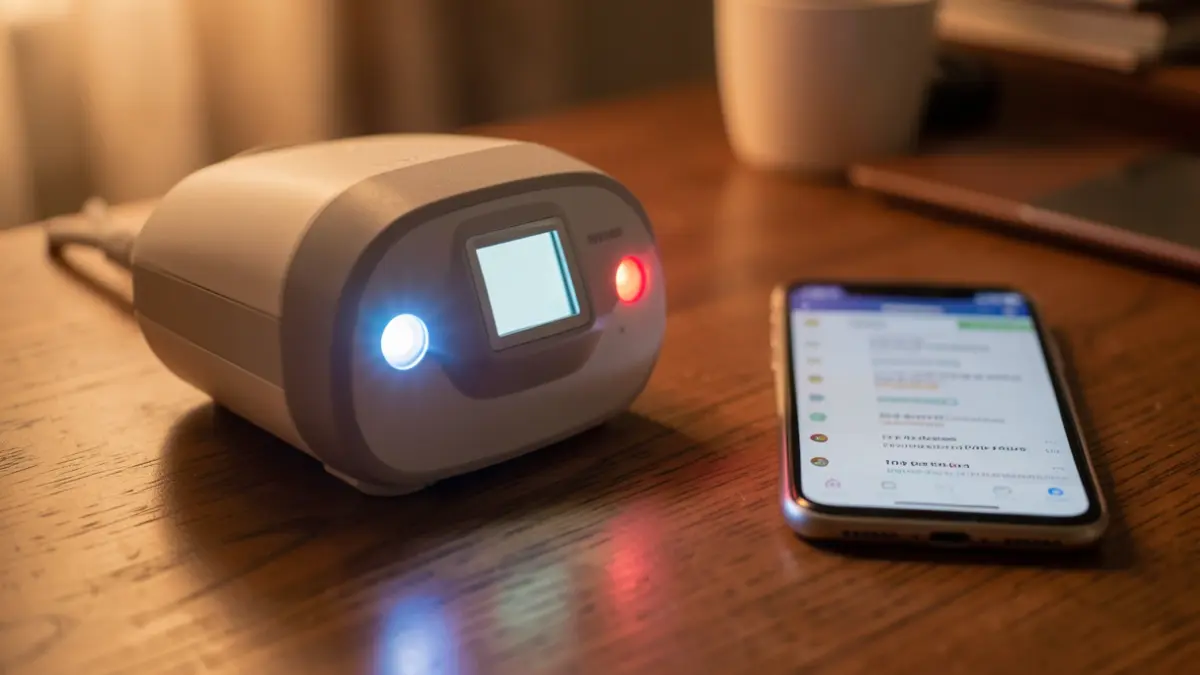
Medhansh Jaishanker, a 21-year-old second-year Mechatronics Engineering student at UWE Bristol, has developed the Smart Medical Box, a device aimed at improving medication accessibility. The invention seeks to reduce missed or incorrect doses by alerting users when to take their medication.
The Smart Medical Box operates in conjunction with a mobile and desktop application, allowing users to set medication schedules. Doctors or pharmacists can also configure these schedules. The device features continuous buzzing, flashing lights, and voice prompts to indicate which compartment to take medication from, stopping when the compartment is accessed. Additional features include a child safety lock and a slot for tablet packs.
The inspiration for the device stemmed from Jaishanker's observations of his grandmother's difficulties in managing her medication when he was 13. He noted her frequent forgetfulness and instances of taking medication twice. "I saw my grandmother struggling with this problem and she would often ask for my help, so I made a prototype. Now I want to develop it further to help millions," Jaishanker stated.
Medication adherence is a significant health and economic issue in the UK. In 2019, approximately 8.4 million people in England were prescribed five or more medicines regularly, with an estimated 30-50% of medicines for long-term conditions not taken as intended, leading to preventable hospital admissions and increased pressure on health services.
Jaishanker realised the widespread need for a cost-effective and accessible product after commencing his engineering course at UWE Bristol and researching the issue. He has received substantial support from UWE Bristol academics, including Dr Appolinaire C. Etoundi and Vice Chancellor Professor Sir Steve West, as well as the university’s Enterprise team and Enterprise Engine.
Guidance on user testing, market strategy, and healthcare innovation pathways was provided by contacts at Health Innovation West of England and the Bristol Robotics Lab. Jaishanker commented, "My UWE Bristol journey has been incredible. I have received so much support in design and commercial aspects both on my course and through Student Ventures. Because of UWE I made connections with south-west organisations proving invaluable in further developing the Smart Medical Box."
“"I saw my grandmother struggling with this problem and she would often ask for my help, so I made a prototype. Now I want to develop it further to help millions."
Jaishanker's previous inventions include a camera system for detecting emergencies and a portable screen for his grandmother. He is also developing an upper-limb prosthetic arm with tactile feedback at the Bristol Robotics Laboratory.
Following success in an ESBF-funded enterprise competition at UWE Bristol, Jaishanker won the Public Vote Award at the Royal Academy of Engineering's Champion of Champions competition. He plans to use the prize money to provide learning equipment and entrepreneurial skills training to underprivileged children in India and to further develop the Smart Medical Box prototype.
"I’m thrilled to have won the Public Vote Award at this year’s ESBF Champion of Champions Grand Final. I will be using some of the prize money to support underprivileged children in India by providing them with learning equipment and entrepreneurial skills training, drawing on the knowledge and skills I have been fortunate to gain at UWE Bristol. I will then use the remaining prize money to further develop the third prototype of the Smart Medical Box and begin scaling up," Jaishanker said.
Dr Appolinaire C. Etoundi praised Jaishanker's curiosity, compassion, creativity, and courage, highlighting his journey from a personal problem to a potential societal innovation. "Having supported Medhansh through the development of his Smart Medical Box, I have been impressed by his determination, technical acuteness and entrepreneurial spirit," Dr Etoundi stated.