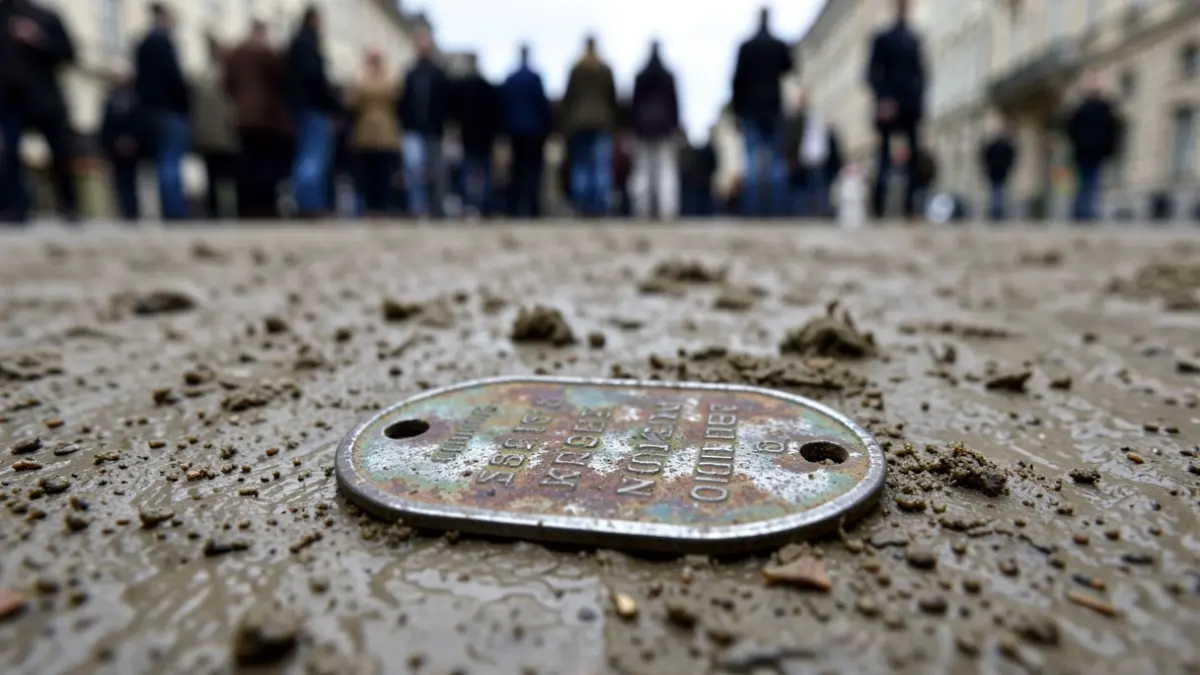
The discovery was made by military history enthusiast Nik Brown, whose dog unearthed the artefacts at Stoney Cross, a historic site in the New Forest. After cleaning, the inscription on the dog tags was deciphered as belonging to Dennis L. Cooper.
Tracing the soldier's journey from his American home in Buffalo, New York, involved significant detective work, with Nik Brown enlisting the help of fellow historians Chris Brown and Roger Hopkins. A breakthrough came when Nik contacted Dennis's granddaughter, who was surprised by the news.
Remarkably, Nik Brown discovered he shared the same civilian profession as Corporal Cooper: manufacturing consultants. This background led him to the Innovation Studio, where he frequently showcased advanced technology to local manufacturers.
Anatol Just, Senior Technician at the Innovation Studio, undertook the challenge. Standard 3D scanning struggled with the corroded metal, prompting the use of Reflective Transformation Imaging (RTI). Anatol developed a custom 'press form' technique, using a 20-tonne hydraulic press to imprint the weathered texture onto new metal.
The original dog tags have now returned to the United States to be reunited with Corporal Cooper's family. The replicas have been donated by Nik Brown to the Friends of the New Forest Airfields (FONFA) Heritage Centre in Bransgore.
Sam Ruddy, Chairman of FONFA, stated, "To have these replicas here at the FONFA Heritage Centre is truly fantastic. Dennis Cooper’s story highlights the vital, personal connections between the New Forest and the Allied servicemen who passed through here in 1944. Thanks to Nik, Doodle, and the brilliant technical work at Arts University Bournemouth, visitors to the museum will be able to connect directly with Corporal Cooper’s legacy for many years to come."