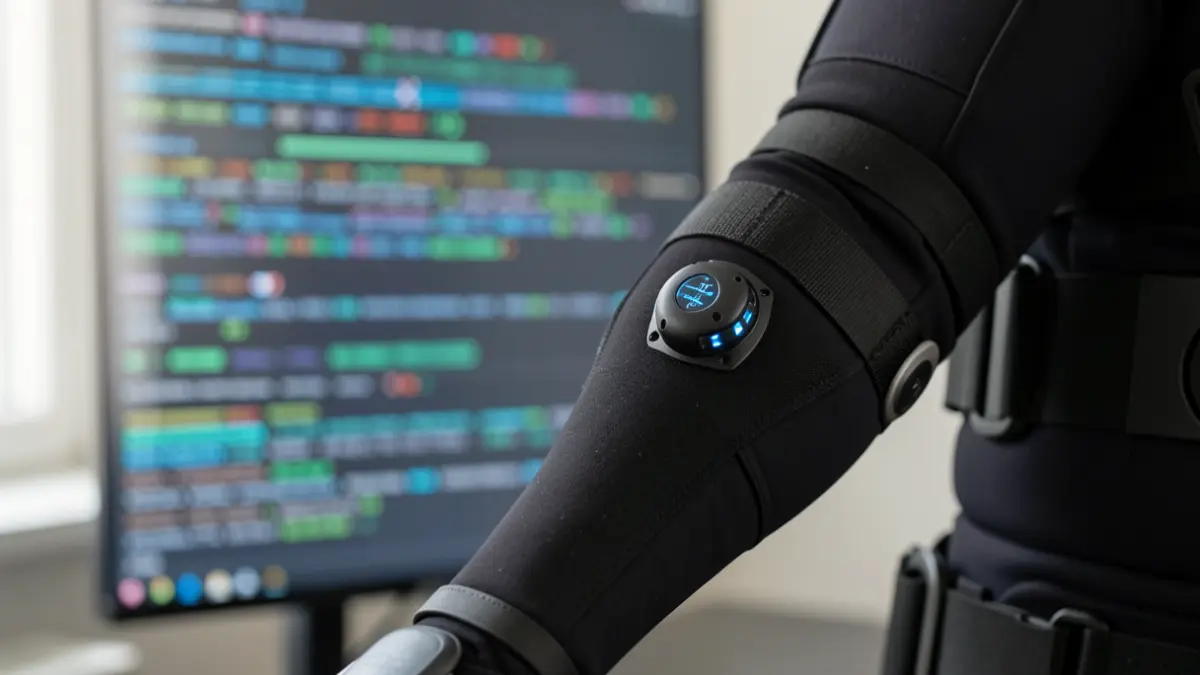
The technology, which converts human movement into digital data, is often perceived as highly accurate. However, the research discovered that it frequently produces distorted representations of disabled individuals' bodies or excludes them entirely. This issue creates barriers across various applications, including film and video game production, virtual reality avatar creation, athletic performance analysis, and patient mobility assessment in clinical settings.
Academics collaborated with disabled artists, including musicians and dancers, to examine the technology. Their findings build upon existing research suggesting that current motion capture systems are based on outdated assumptions derived from mid-20th-century military studies. Dr Dominic Potts, a lecturer in computer science at UWE Bristol, stated that disabled individuals are often viewed by these systems primarily as patients needing correction, rather than as active participants like performers, gamers, or creators.
“"We found that motion capture systems are not neutral recording devices. They are built around narrow assumptions about the structure and motion of bodies, which shape the models used in today's commercial systems. The result is that when a body doesn't match the template, the system doesn't adapt, the body is made to fit."
Dr Potts explained that all users are forced into a standardised body model. While some individuals fit this template more easily, physically disabled people often encounter significant barriers or experience dramatic distortions in their digital representation. He highlighted the potential high-stakes consequences in clinical contexts, such as misdiagnosis or harm during rehabilitation, though he noted this requires further exploration. For disabled actors and gamers, the lack of investment in adapting the technology means they may be unable to use it.
The research team, including collaborators from University College London, Goldsmiths University, x-io Technologies, MiMU Gloves, Candoco, and Dyskinetic, worked with disabled dancers and musicians who all faced challenges with existing systems. Dr Potts added that this exclusion is pervasive, but the artists gained a new perspective on how technology could be designed inclusively from the outset.
Clarice Hilton from University College London's Slade School of Fine Art commented that the technology's shortcomings have been overlooked due to societal attitudes, where accessibility is often an afterthought. She stressed the importance of involving disabled people in the design process from the beginning.
To address these issues, the team has proposed four 'grand challenges' for the industry and academia. Professor Tom Mitchell, a UK Research and Innovation Future Leaders Fellow and lead of the mica lab at UWE Bristol, emphasised the demand for more equitable technology. He noted that with 1.3 billion disabled people globally, and everyone experiencing temporary disability, a significant portion of the population is excluded due to a lack of responsible development that includes diverse users from the start.
An academic paper on the project, titled 'EqualMotion', was presented at the ASSETS 2026 conference in Portugal, receiving an honourable mention. The project was funded by MyWorld/Innovate UK and a UKRI Future Leaders Fellowship.
“"For me, the power of the EqualMotion project came in actually having the choice to fully explore my Disabled body as a creative, expressive tool. Previous technologies, in their inaccessibility, send the wrong message that motion capture (as a creative tool) is not for Disabled people - it is not for my body."
Kris Halpin from Dyskinetic shared his experience, stating that the project allowed him to explore his disabled body creatively without judgment or barriers, empowering him to see it as an expressive tool rather than something inaccessible.