
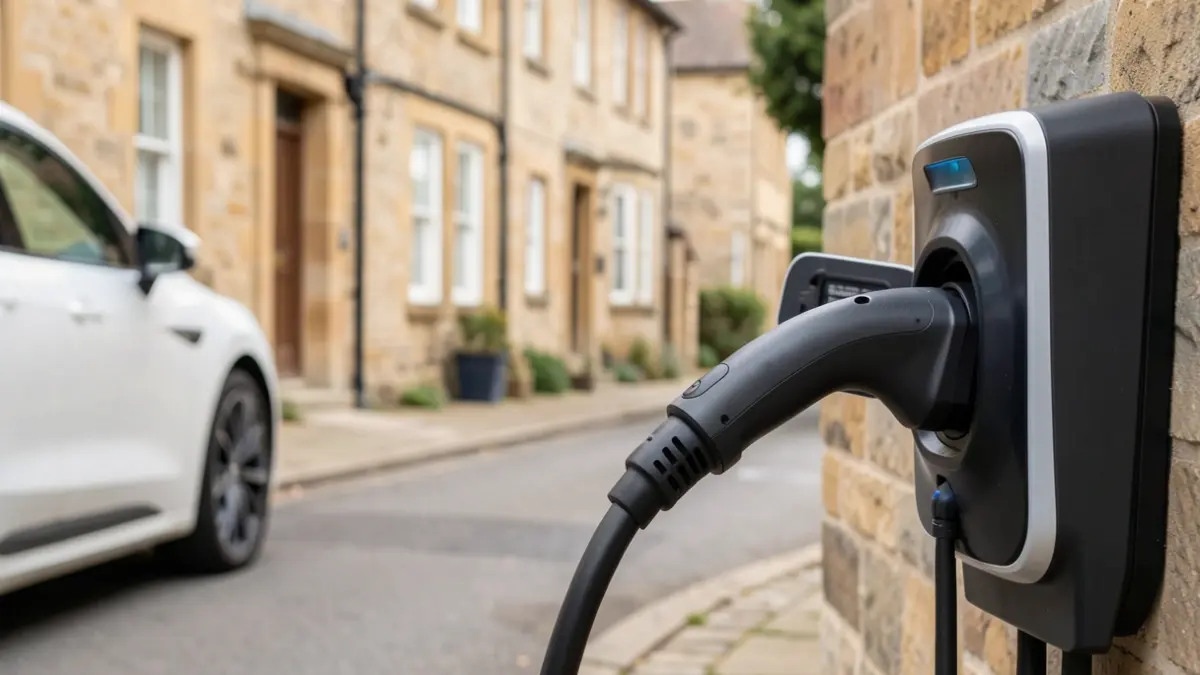
The LEVI programme follows a review of the Council’s approach to delivering public electric vehicle charging infrastructure, undertaken after the withdrawal of the previously appointed chargepoint operator. The delay allowed the Council to strengthen its evidence base, refine its delivery approach, and revise the contract to provide more flexibility for Somerset’s urban and rural communities.
The £3.783 million LEVI Capital Fund allocation remains protected and will continue to be used alongside significant private sector investment to support publicly accessible charging infrastructure. LEVI is a government-funded programme designed to support local authorities in delivering public charging infrastructure, particularly in communities where residents lack off-street parking and cannot install private charge points.
The Council is now preparing a revised submission to the Office for Zero Emission Vehicles (OZEV) before progressing a new procurement process. The proposed revised approach maintains the Council’s commitment to supporting residents without access to off-street parking, directing LEVI funding towards locations where market intervention is required and ensuring equitable provision across Somerset’s urban and rural communities.
“"While the withdrawal of the original supplier was disappointing, it provided us with an opportunity to review the programme, learn from the market and strengthen our approach. We now have a revised strategy that is better aligned with Somerset’s communities, supports both urban and rural areas and provides a stronger framework for delivering EV charging infrastructure across the county."
The Council is also developing plans to introduce a three-year pilot scheme to test how charging cables can be safely laid across footways for residents without off-street parking. This would be paid for thanks to £220,780 of capital funding from the Department for Transport’s Electric Vehicle Pavement Channel Grant (EVPCG).
The Council’s preferred approach would see approved installations delivered through a controlled, supplier-led pilot, with each application assessed individually against safety, accessibility and operational criteria. Approval of a cross-pavement channel would not guarantee access to a parking space and would not create any parking rights. Existing parking restrictions, permit schemes and traffic management arrangements would continue to apply.
“"Cross-pavement channels have the potential to provide a practical solution for residents who are currently unable to install a home charger because they do not have off-street parking. The pilot will allow us to test the approach in a controlled way, gather local evidence and ensure that safety and accessibility remain our priority."
The pilot is expected to operate for up to three years and will be closely monitored to assess demand, safety, accessibility, maintenance requirements and customer experience before any wider policy decisions are considered. Work on both programmes will continue, with the next phase focused on progressing the revised LEVI submission and developing the Cross-Pavement Channel pilot.