
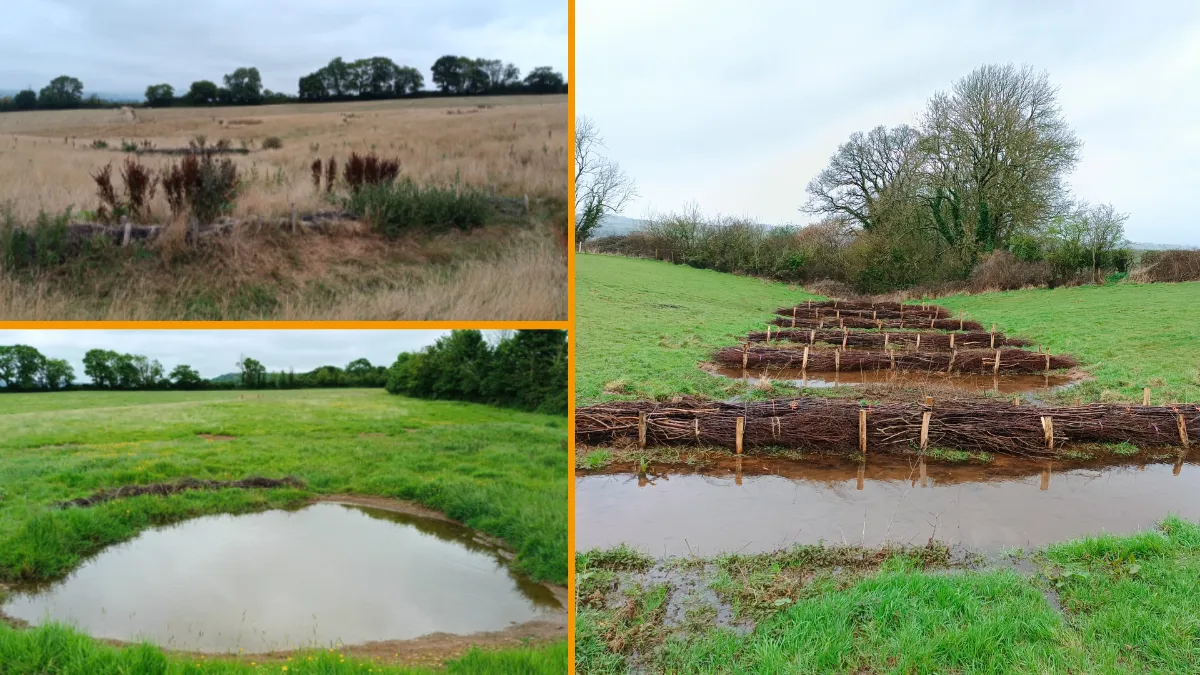
A team from the University of Exeter studied the performance of natural flood measures during 662 storms across five Devon river valleys. They concluded that these natural interventions are a vital component of flood protection strategies, especially as climate change is expected to increase the frequency and intensity of extreme weather events. The research highlights how these measures can slow down fast-flowing water and store it temporarily higher up in a catchment, preventing large volumes from reaching communities downstream all at once.
The study, funded by the Department for Environment, Food & Rural Affairs and commissioned through the Devon Resilience Innovation Project (DRIP) led by Devon County Council, examined sites including Stokeinteignhead, Tattiscombe, Exton, and two catchments near Ottery St Mary. Depending on the location, the natural measures reduced peak river flow – the maximum volume of water flowing downstream at any one time – by between 30 and 62 per cent.
Combinations of ponds, leaky barriers, and tree planting were associated with measurable reductions in peak river flows. The most significant reduction, a 62 per cent fall in peak flow, was observed near Ottery St Mary, where log jams, ponds, tree planting, and land management changes helped to delay the river's surge. On average, rivers across the five catchments took over an hour to reach their peak flow.
At Exton, leaky dams, tree planting, a pond, and land management changes reduced peak flow by 53 per cent. In Stokeinteignhead, leaky dams, ponds, and a scrape (a shallow hollow for collecting rainwater) cut peak flow by half. Tattiscombe also saw benefits from a combination of measures, including floodplain reconnection, large wood additions, leaky dams, tree planting, scrapes, and ponds, which reduced peak flows and delayed them by an average of one hour.
Researchers noted that the most effective results typically came from combining different measures and strategically placing them to intercept water during heavy rainfall. However, they cautioned that the effectiveness can vary depending on the landscape, rainfall intensity, and ground saturation.
“"One of the most rewarding aspects of this research has been seeing the evidence emerge from real rainfall events across small, rapidly responding catchments in Devon. By monitoring hundreds of events, we found that carefully combined natural flood management measures can reduce peak river flows and delay the response of streams to heavy rainfall. These findings show the real potential of working with nature to help manage flood risk, while also reminding us that every catchment is different, and that long-term monitoring is essential to understanding what works best and where."
Councillor Jacqi Hodgson, Devon County Council Cabinet Member for climate change and biodiversity, commented on the findings: “There isn’t one simple answer to flooding, but these results show that a combination of relatively small measures across a catchment can add up and make a real difference, helping to hold water back, reducing the peak flow and the volume of water reaching streets and properties downstream. Upstream measures give communities downstream more time to react to storms.”
She added that natural flood management is not a replacement for conventional defences like flood walls and embankments, but it can complement them. “The important lesson is that we need the right measures in the right places, and that local people can assist with this alongside the other ways we prepare for and manage flood risk across Devon,” she stated.