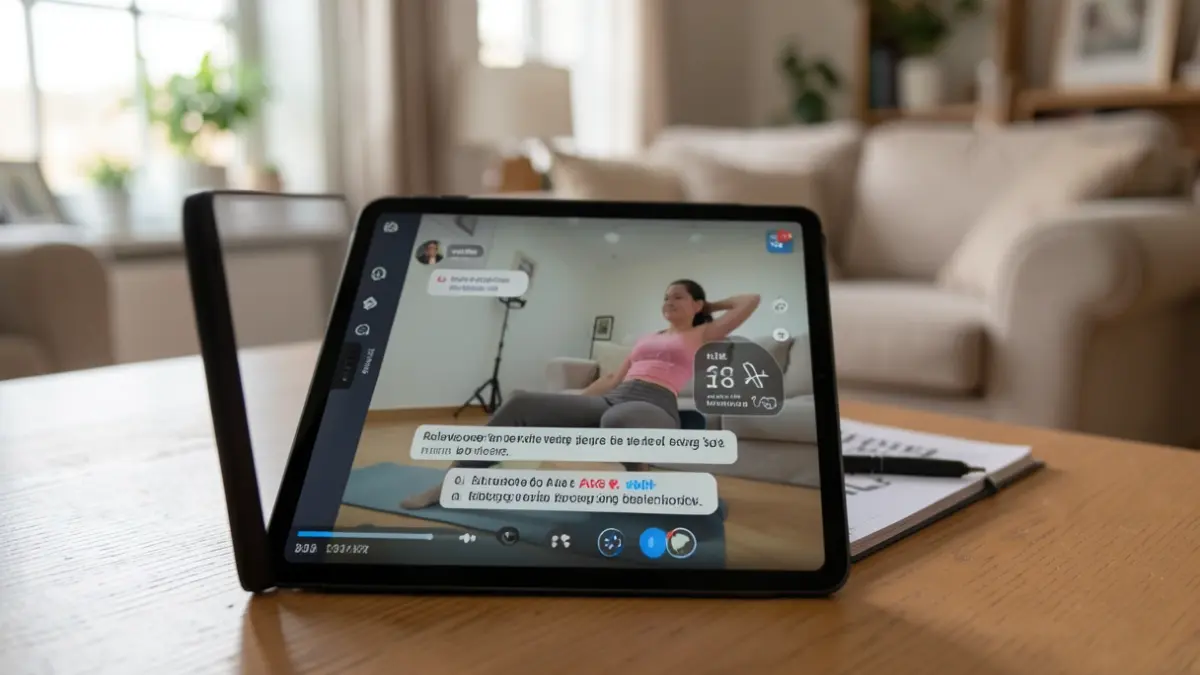
Dr Praveen Kumar, an Associate Professor in Stroke Rehabilitation at UWE Bristol, spearheaded a project that created a prototype app utilising artificial intelligence. The app generates personalised exercise programmes by drawing from a library of rehabilitation videos, tailoring them to individual patient needs, abilities, and recovery goals.
The project, funded by the National Institute for Health and Care Research (NIHR), involved collaboration between Dr Kumar, fellow academics, clinicians, technology experts, and stroke survivors. The aim is to enhance access to personalised rehabilitation support and empower survivors to continue their recovery journey within their communities.
Stroke affects approximately 118,000 people annually in the UK, significantly impacting quality of life and NHS resources. Clinical guidelines recommend substantial daily rehabilitation and activity. The app, designed for use on tablets and computers, aims to help individuals correctly choose and progress with exercises, facilitating self-management of rehabilitation at home. It features existing videos of stroke patients performing exercises under physiotherapist guidance.
This development builds upon Dr Kumar's decade-long work delivering community exercise classes in collaboration with the Bristol After Stroke charity. Feedback indicated that while exercise videos were engaging and aided independence, users felt unsure how to progress. The integration of AI into portable devices was proposed to offer real-time input and improve home-based rehabilitation engagement.
“"Our vision is to improve access to personalised rehabilitation support and empower stroke survivors to continue their recovery journey within their own communities."
The project received a grant as part of over £3 million in NIHR funding for 34 cutting-edge medical technologies addressing brain injury. The initiative, funded through the Invention for Innovation (i4i) Funding At the Speed of Translation (FAST) 4 Awards, supports the development of innovative healthcare technologies for acquired brain injury (ABI).
Dr Kumar served as chief investigator, collaborating with co-investigators Dr Michael Loizou and Dr Ali Al-Nuaimi (University of Plymouth), Professor Kenton O’Hara and Dr James Pope (University of Bristol), and Dr Maria Galvez Trigo (Cardiff University). Co-researchers included Regan Shakya, Anika Pinto, Sarah Koerner, and Thrisha Rajkumar.
The team partnered with Claire Angell and Sarah Sparks (Patient Partners), Amrik Singh (Clinical expert, the Brightwell Centre), Zehra Haq (Community Ethnic Partner), and Rebecca Sheehy (CEO, Bristol After Stroke) for app development.
Dr Kumar explained that AI can tailor rehabilitation exercise videos, potentially shortening longer sessions and guiding patients through the process. This approach aims to save time for clinicians and therapists while benefiting patients. Future collaborations with industry could enable clinicians to monitor patients' rehabilitation progress through recorded exercises, creating a complete feedback loop.
The project is now entering a new phase of development and evaluation. The team is seeking connections with stroke clinicians, rehabilitation services, researchers, AI specialists, healthcare organisations, industry partners, and patient groups who share the ambition to transform community stroke rehabilitation through innovation.